Anton von Leeuwenhoek, the father of microscopy, discovered a sacred crystalline substance when he first observed his own semen with a microscope in 1674. In 1678, he reported this discovery to the Royal Society. Several scientists subsequently discovered this independent crystalline compound, called spermine, over the next 200 years, but it was not until 1920 that the chemical structure of spermine, as well as the chemistry of another related molecule, spermidine, was revealed structure.
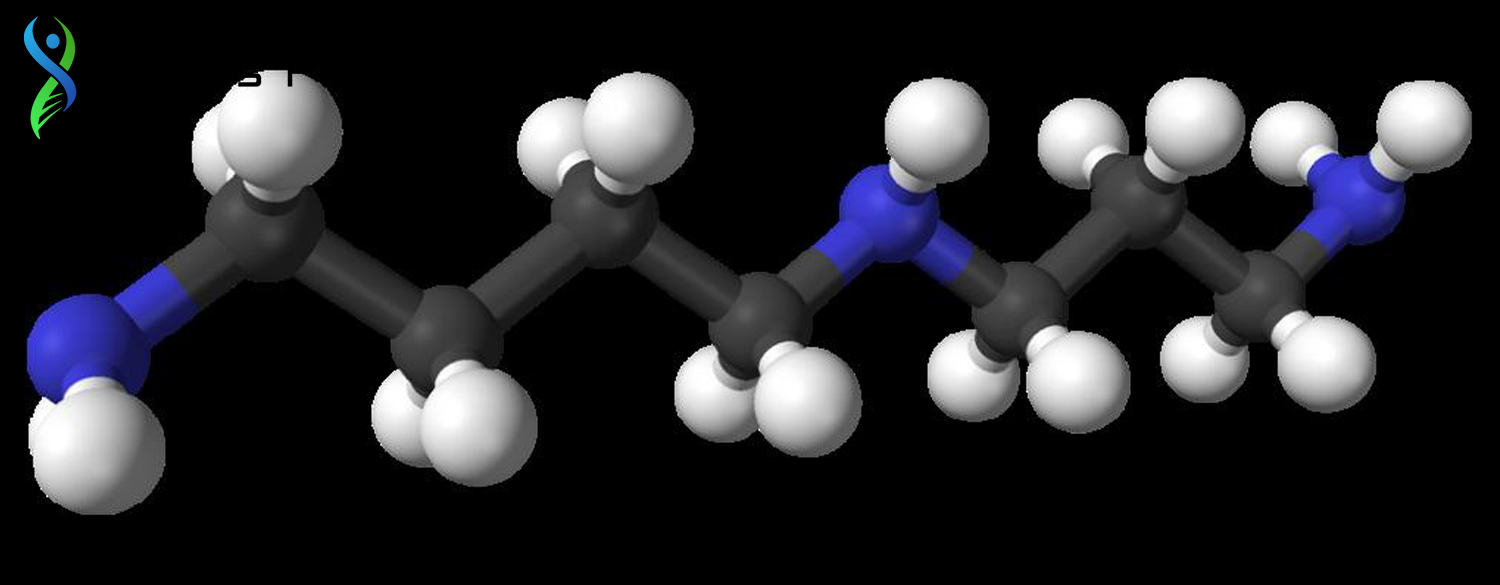
Structurally, since semen molecules contain multiple amino groups, spermine and spermidine are polyamine compounds. Both substances are linear conformations and are not only structurally related, but spermine is derived from spermidine.
1. Bioavailability and metabolism of spermidine
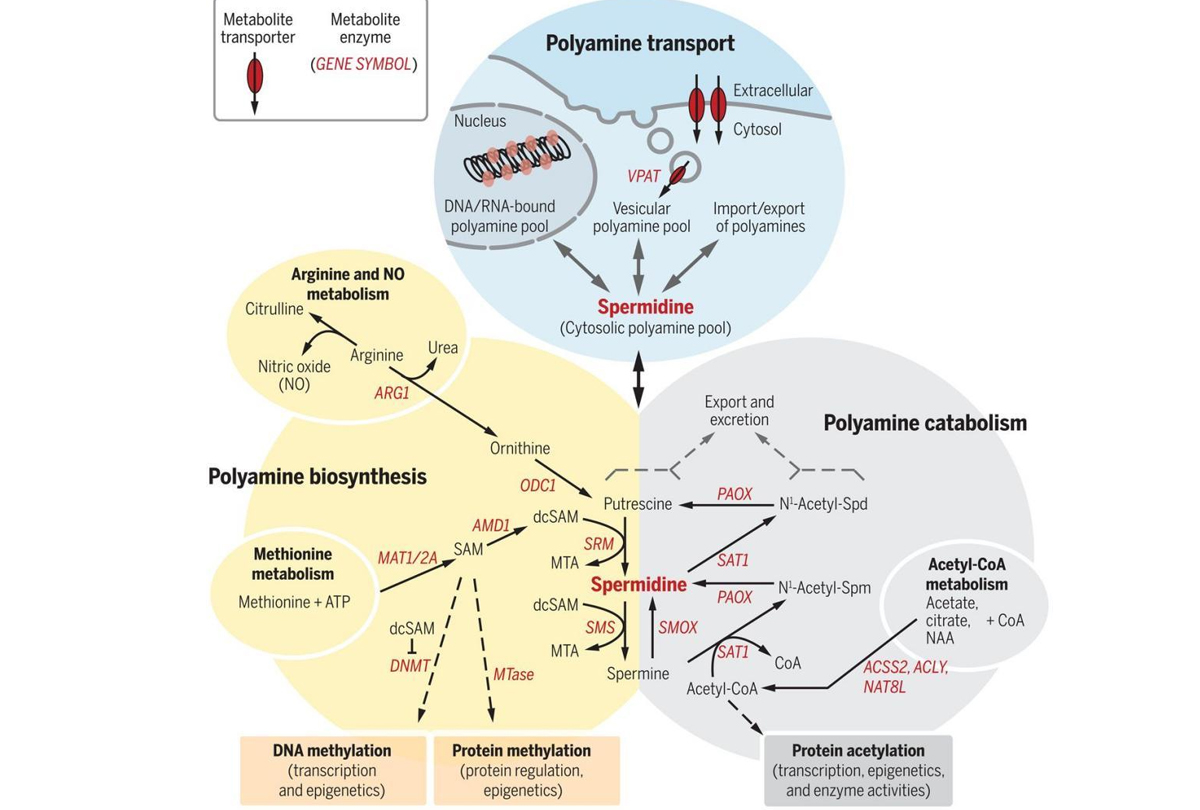
Polyamine concentrations in mammals depend on factors such as their nutrient supply, synthesis by the intestinal microbiota, uptake, cellular biosynthesis, catabolism, and urinary excretion. Tissue spermidine concentrations decline with age. This may be due, at least in part, to reduced biosynthetic activity of polyamine-producing enzymes.
2. Metabolism and transport of spermidine
Intracellular spermidine is produced by several pathways: extracellular uptake of polyamines, endogenous biosynthesis, catabolism and excretion. Biosynthesis is a tightly regulated stepwise reaction in putrescine, spermidine, and spermine formed from the precursor ornithine. On the one hand, the catabolism of polyamines involves the oxidative degradation of spermine to imine; on the other hand, both the degradation and secretion of spermidine and spermidine require the enzyme spermidine-spermidine N1-acetyltransferase and Subsequent oxidation proceeds to acetylation. In a recent study, histone deacetylase 10, a key regulator of autophagy and cell survival, was implicated as an additional mediator of polyamine metabolism due to its ability to deacetylate spermidine. .
The transport of polyamines in mammals is less understood but may involve plasma membrane transporters present in yeast and bacteria. Cellular polyamine uptake and secretion can also be mediated by endocytosis and exocytosis, respectively.
Absorption and excretion of spermidine
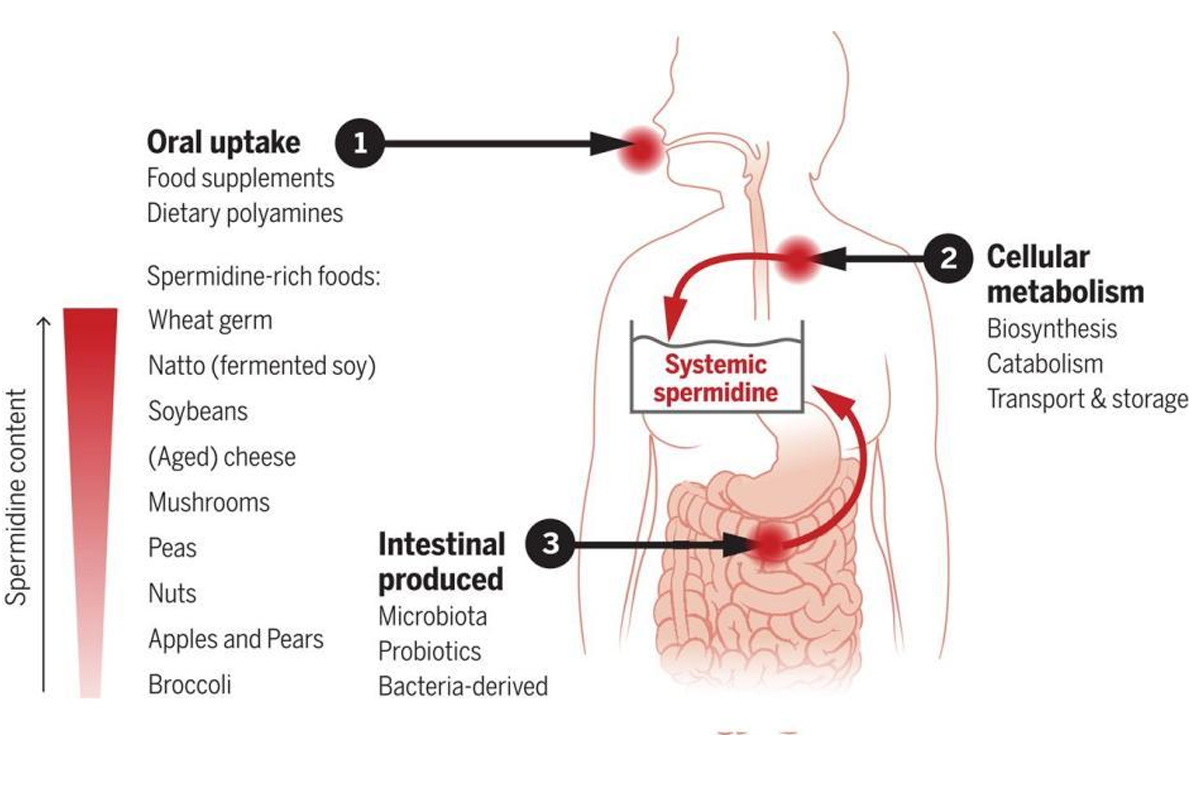
In addition to cellular biosynthesis, two other sources of spermidine that are equally important for systemic spermidine availability are oral ingestion and production by intestinal microorganisms. Select unprocessed plant-based foods, such as durian fruit, are rich in polyamines. In addition, fermentation processes involving bacteria and fungi used in the food industry can cause microorganisms to produce polyamines. Milk and soy products (e.g., mature cheese and natto) sometimes have subjective malodorous properties that are the result of polyamines. . Ingested spermine and spermidine are rapidly absorbed from the intestines and distributed without degradation. Therefore, diet affects polyamine concentrations in the blood and is highly variable in humans.
3. What is the function of spermidine?
In the early days of semen research, hints about spermine's function emerged from different areas of research. A Russian researcher named Poehl isolated spermine and proposed that its structure may cause physiological stimulant effects. He specifically pointed out that spermine will increase the alkalinity in the blood, thus increasing the carrying capacity of the blood and becoming a "power" to enhance the body's physiological capabilities.
In a paper published in 1992, it was hypothesized that spermine and spermidine could protect DNA from free radical oxidative damage, opening a chapter in the research on spermidine's anti-aging effects. Research results show that as age increases, polyamine levels in biological tissues tend to decrease.
(1) Anti-aging effect of spermidine
A recent study published in "GeroScience" by Professor Evgeni Ponimaskin from the Institute of Neurophysiology at Hannover Medical School (MHH) in Germany analyzed how long-term use of spermidine affects organs commonly affected by aging and the processes that occur. issue. Scientists gave aging mice spermidine by drinking water for six months. The results showed that mice given spermidine showed stronger anti-aging effects compared to untreated animals. "Supplementation with spermidine ensured animals suffered less damage to the kidneys and liver and showed better performance, enhancing glucose supply to the brain," study leader explains. Age-related hair loss was also significantly lower than in controls Group.
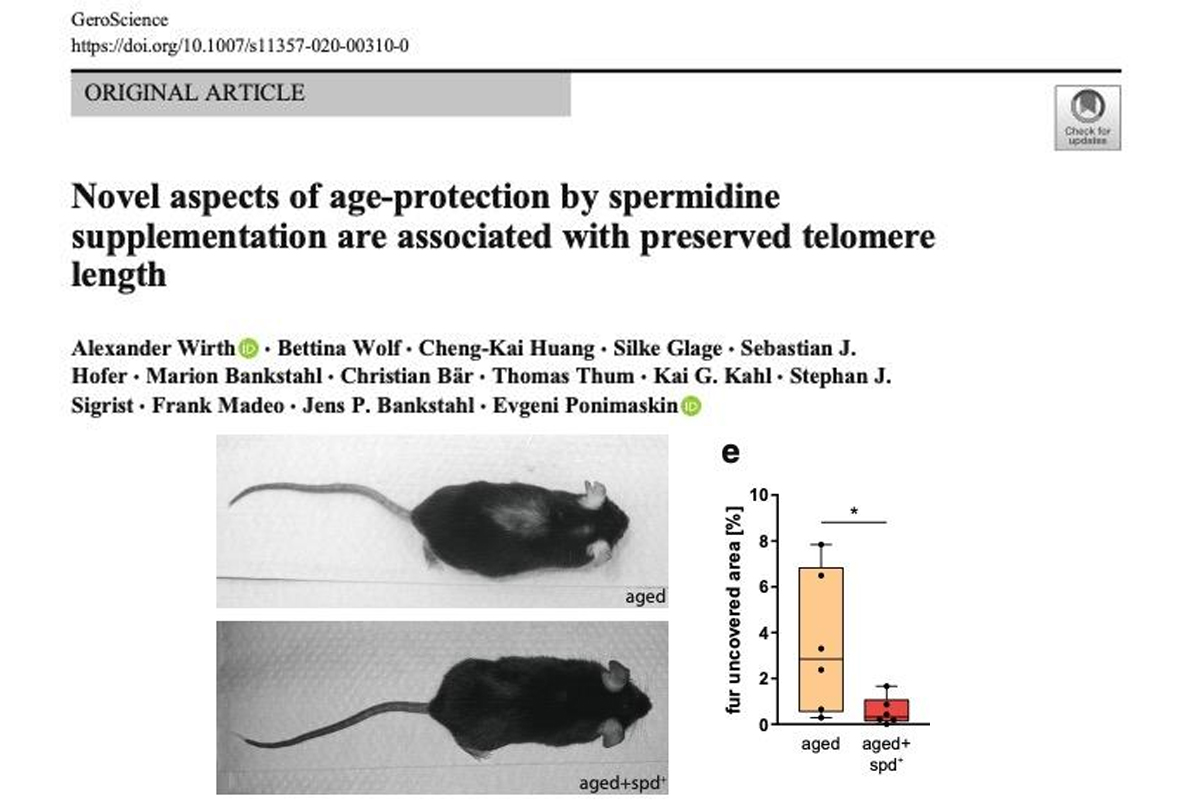
The researchers were particularly impressed by spermidine's cardioprotective effects. They found that spermidine's cardioprotective effects were associated with reduced telomere shortening in heart tissue. Telomeres protect the ends of chromosomes in human cells from degradation. Chromosomes are the carriers of our genetic information. Every time cells divide, their end telomeres shorten a little. When cells stop dividing, telomeres shorten further. At some point, they become so short that what's called programmed cell death occurs. "The telomere length of the spermidine-supplemented mice was similar to that of young animals," said Professor Ponimaskin. The findings may also have long-term implications for preventing age-related diseases in humans.
1. The protective effect of spermidine in cardiovascular and muscle-related diseases
In 2016, a large research team with members from several European countries and the United States found that mice fed a compound called spermidine lived longer and had better cardiovascular health than normal mice. , and published the study in the journal Nature Medicine.
The researchers fed mice water mixed with spermidine, while other groups of mice were fed plain water. After observing the lifespans of rodents, the researchers found that mice given spermidine lived longer than mice that were not given spermidine. The mice in the spermidine group also had better heart function and lower blood pressure. blood pressure. They also found that rats fed a high-salt diet, which causes high blood pressure, had lower blood pressure readings when given spermidine.
Additionally, the study found that spermidine reversed age-induced arterial stiffness, reduced oxidative damage to endothelial cells in aged mice, and attenuated atherosclerosis in apolipoprotein E-deficient mice on a high-fat diet (HFD). Plaque formation. Oral administration of spermidine reduced hypertension and delayed transition to heart failure in rats fed a high-salt diet (a model of hypertensive heart failure) for 20 weeks, further supporting the antihypertensive and vascular health-promoting role of dietary spermidine. Function.
Anti-tumor effects of spermidine
Spermidine supplementation reduces tumorigenesis in mice. The study found that dietary spermidine reduced the severity of liver fibrosis and the incidence of hepatocellular carcinoma caused by chemical injury in mice. Administration of spermidine also slowed the growth of CT26 colorectal tumors transplanted into immune-competent mice. Another study found that spermidine supplementation reduced the growth of transplantable tumors in mice treated with chemotherapy.
The effect of spermidine on metabolic diseases
Whether polyamines can be used to treat obesity and type 2 diabetes is an important topic for future research. The study found that daily administration of spermine to mice eating an HFD prevented obesity and improved glucose tolerance. Likewise, spermidine reduces weight gain and the comorbidities of obesity induced by high-calorie diets.
Dr. Ni Yinhua from the School of Biotechnology and Engineering of Zhejiang University of Technology pointed out that ingesting spermidine can effectively improve obesity-related parameters in obese mice, and published his research results in the American journal Gut Microbes.
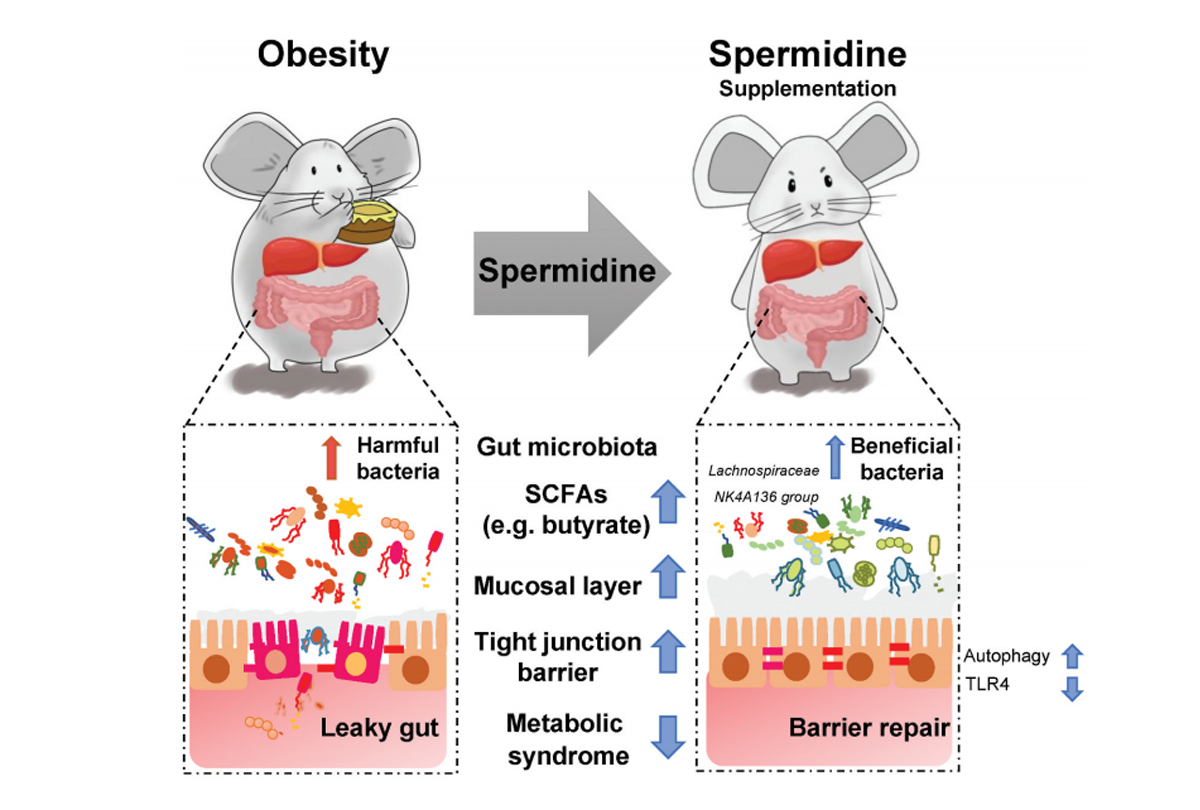
Studies in high-fat diet-induced obese mice found an inverse correlation between spermidine intake and obesity-related parameters. Spermidine intake reduced diet-induced weight gain in a dose-dependent manner, which was primarily attributed to a significant reduction in fat. Histological analysis and liver lipid content showed higher accumulation of lipids in the livers of mice fed a high-fat diet, while spermidine intake reduced lipid accumulation.
1. The neuroprotective effect of spermidine
In flies, spermidine feeding protects against age-induced memory impairment and locomotor loss in an autophagy-dependent manner.
The research team of Volker Haucke and Stephan J. Sigrist of the Freie Universität Berlin published an important study in the journal Scientific Reports in December 2019. This study shows that dietary spermidine prevents age-related synaptic changes at hippocampal mossy fiber (MF)-CA3 synapses and protects against aging-induced neuronal mitochondrial loss.
In this study, the researchers used mice of different ages, added or not added spermidine to their drinking water for 6 months, and then measured their autophagy levels. The results showed that compared with young mice, the level of autophagy in MF synapses formed by hippocampal granule cells on CA3 pyramidal neurons was significantly reduced in 24-month-old mice. Spermine significantly increased autophagy levels in mice aged 24 months. In addition, the addition of spermidine also inhibited the age-related decrease in mossy fiber pore mitochondrial density; at the same time, the aging-induced mitochondrial swelling at the neurotransmitter release sites of MF-CA3 and CA3-CA1 synapses was significantly improved. Mitochondrial quality was also significantly improved. These results indicate that spermidine plays a protective role in mitochondrial aging.
4. Conclusions and open questions
Dietary addition of spermidine extends lifespan and healthspan by protecting multiple animal models from a range of age-related pathologies. The mechanism of spermidine-induced autophagy is the main mechanism of spermidine. In addition, spermidine has other direct antioxidant and polyamine metabolic effects and related metabolic pathways, especially the increased bioavailability of arginine and Production of NO.
Spermidine is an abundant naturally occurring polyamine found in all living things, from bacteria to men, and occurs naturally in the human diet in reasonable but varying amounts. Therefore, lifelong spermidine supplementation does not appear to have any negative side effects in mice. In clinical studies, spermidine uptake can be improved through several strategies, namely by (i) supplementing with synthetic spermidine, (ii) changing the composition of the diet towards polyamine-rich foods, (iii) using polyamine-rich foods. Contains natural plant extracts (iv) Administration of prebiotics and probiotics that favor microbial polyamine synthesis in the intestine. Nonetheless, contraindications to spermidine administration must be carefully defined in clinical trials, which may include patients with advanced cancer and renal failure. Therefore, it is desirable to develop spermidine analogs that can act at lower doses or have more stable pharmacokinetic profiles to prevent or treat specific diseases.
references:
Ma L , Ni Y , Wang Z , et al. Spermidine improves gut barrier integrity and gut microbiota function in diet-induced obese mice[J]. Gut Microbes, 2020, 12(1):1-19.
Madeo F , Eisenberg T , Pietrocola F , et al. Spermidine in health and disease[J]. Science, 2018, 359(6374):eaan2788.
Marino G, Pietrocola F, Eisenberg T, et al. Regulation of Autophagy by Cytosolic Acetyl-Coenzyme A[J]. Molecular Cell, 2014, 53(1):710-25.
Pietrocola F , Lachkar S , Enot D P , et al. Spermidine induces autophagy by inhibiting the acetyltransferase EP300[J]. Cell Death and Differentiation, 2014, 22(3).
Morselli E , Marino G , Bennetzen M V , et al. Spermidine and resveratrol induce autophagy by distinct pathways converging on the acetylproteome[J]. J Cell Biol, 2011, 192(4):615-629.


